


SEO is the one marketing channel where it’s genuinely easy to look busy without doing anything useful. Monthly reports, traffic graphs, keyword rankings, it can all appear productive while your website sits exactly where it was six months ago. I’ve seen it. I’ve heard about it from almost every new client who’s worked with an agency before us.
This article is designed to arm you with enough understanding of what good SEO work actually looks like that you can hold your agency accountable. You don’t need to become an SEO expert. You just need to know what questions to ask.
THE CORE ACTIVITIES OF AN SEO ENGAGEMENT
A proper SEO engagement typically covers five main areas: technical audit and ongoing technical health, keyword/content strategy, on-page optimisation, link building, and reporting. Each one matters. Each one has a version that looks legitimate from the outside but accomplishes very little.
It’s also important to ensure your SEO engagement covers as many of these five areas as possible. The amount of SEO specialists I see nowadays who ‘don’t believe in linkbuilding’ is a serious cause for concern.
Let’s go through these five areas properly.
TECHNICAL AUDIT
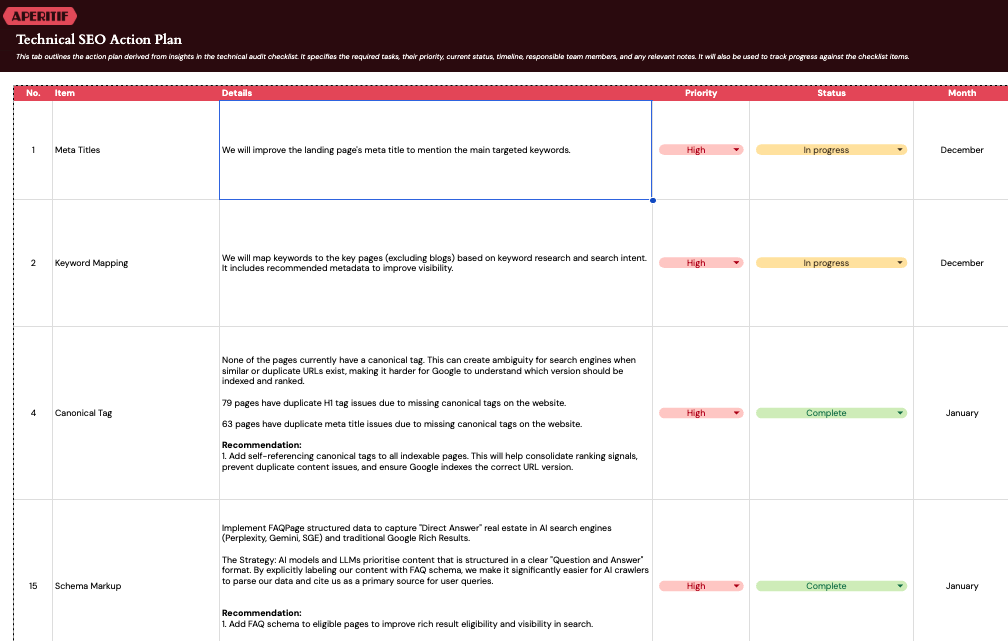
The first thing any serious SEO agency should do when they take on a new client is a through technical SEO audit. This is an examination of your website’s underlying structure, how pages are crawled and indexed by Google, whether there are issues affecting site speed, how internal linking is set up, whether your site is mobile-friendly, duplicate content issues, broken links, and so on.
A real technical audit produces a prioritised document of issues with clear explanations of why each one matters and what needs to be fixed. It should be specific to your website, not a generic checklist.
What a faked version looks like: a PDF of Screaming Frog output with 400 items listed but no prioritisation, no explanation of business impact, and no follow-up to actually fix anything. If you’re getting one of these, like an Ahrefs crawl sent straight to you from the platform, this is usually cause for concern.
Technical SEO isn’t a one-time exercise either. Websites change, pages get added, plugins get updated, things break. Ongoing technical monitoring and actual changes should be part of any active SEO retainer.
Questions to ask:
- Can you show me the optimisation roadmap based on the audit you created me?
- What were the top five technical issues you found on our site, and which have you resolved?
- Can you show me the before and after in Google Search Console?
KEYWORD & CONTENT STRATEGY
Your keyword and content strategy is the process of figuring out what your potential customers are searching for, how competitive those terms are, and which ones your site has the best realistic chance of ranking for. It sounds straightforward. In practice, it requires genuine thinking about your business, your customers, and the competitive landscape.
A thoughtful keyword strategy starts with understanding your services and the problems your customers are trying to solve. From there, it maps out a combination of high-intent commercial terms (the ones that convert), informational terms (the ones that build trust and authority), and local terms if geography is relevant to your business.
What a lazy version looks like: a spreadsheet of the twenty most obvious keywords in your industry, sorted by search volume, with no commentary on competitive difficulty, no page mapping, and no connection to your actual business goals.
The keyword strategy should also evolve. Markets change, competitors enter, your own service offering shifts. Your agency should be revisiting and refining keyword targets regularly, not treating a twelve-month-old spreadsheet as a live document – this is a living, breathing thing.
Questions to ask:
- Why did you choose these specific keywords over alternatives?
- Which pages are we targeting each keyword with, and why?
- Are these keywords the right intent for what my business goals are?
ON-PAGE OPTIMISATION
On-page optimisation is the work of making individual pages on your website as relevant as possible for the keywords you’re targeting. This includes title tags, meta descriptions, heading structure, page copy, internal linking, and schema markup.
The important thing to understand is that on-page optimisation is not a one-time task you check off the list. It’s iterative. You optimise a page, watch how it performs, and refine based on what the data tells you.
A good agency will be making regular changes to your pages, updating title tags when they’re underperforming, improving the depth and relevance of page content, adding internal links to strengthen topical clusters. These changes should be documented and explainable.
What a poor version looks like: title tags updated at the start of the engagement and never touched again. Content “optimised” by adding a keyword three more times without improving the usefulness of the page.
For example, we find that being consistent with internal links and their anchor texts has such a considerable impact on rankings when implemented correctly.
On written content, we use highly trained, human content specialists who are able to capture the storytelling and brand essence of a business and overlay it with writing for SEO purposes. We’re finding that this approach, whilst more difficult to produce, yields better rankings and ROI. SEMrush supports this through a recent study claiming human written content is 8x more likely to rank.
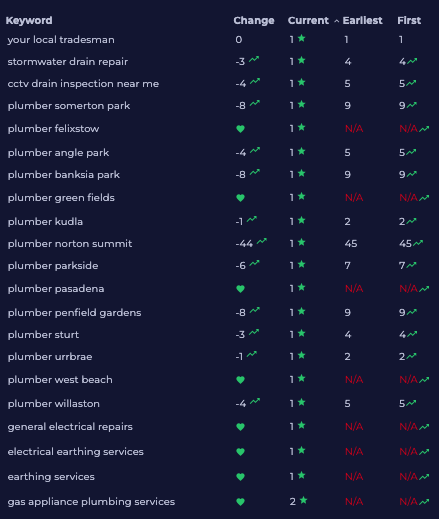
We inherited a client in the plumbing industry who had hundreds of pages generated with AI targeting plumber + individual suburbs in his city. We’ve been slowly and methodically rewriting these pages, which has resulted in the number of keyworfsd in the top 3 positions on page 1 doubling since we started (see screenshot below).
Questions to ask:
- What on-page changes did you make this month, and what results are you expecting or seeing from them?
- Who’s writing my content?
LINK BUILDING
Links from other websites to yours remain one of the most significant ranking factors in SEO. Building them properly is also one of the most time-consuming and difficult parts of the job, which is why it’s the area most prone to cutting corners.
Legitimate link building involves earning or acquiring links from real, relevant websites, industry publications, local directories, professional associations, PR placements, guest contributions, digital PR campaigns. The links need to be from sites that Google sees as credible, and they need to make sense contextually.
What a low-quality version looks like: bulk submissions to link farms, private blog networks (PBNs), directories with no real traffic or authority, or “link packages” sold for a fixed fee. These can cause more damage than they’re worth. Google’s spam detection has become very good at identifying manipulative link patterns, and a manual penalty or algorithmic suppression is a very difficult hole to climb out of.
Aperitif has its own in-house linkbuilding team, all these guys and girls do every day is pitch publishers and earn placements. This enables us to control the qualtiy of placements and still deliver consistent yields.
Ask your agency specifically:
- Where did the links you built this month come from?
- Can you show me the referring domains and their metrics?
If they can’t or won’t show you, that’s a significant warning sign.
REPORTING
Reporting is how you know whether any of the above is working. A good monthly report tells you what happened, why it happened, and what’s coming next. It connects SEO activity to business outcomes: leads, enquiries, revenue, not just traffic numbers and keyword positions.
The things that should be in every monthly SEO report:
- Conversions! This should be objective number 1. Leads or sales from organic search specifically.
- Organic traffic trend (and year-over-year comparison)
- Keyword ranking movements, with context for any significant changes
- Technical issues identified and resolved
- On-page work completed – what actually changed this month (with specifics, not ‘meta data updates)
- Links acquired – the actual URLs of palcements
– A summary of what’s working, what’s not, and what changes are planned next.
What a surface-level report looks like: a pretty dashboard with green arrows on the traffic chart and no explanation of what drove any change. Rankings up? Great. Rankings down? No comment. No action plan.
Questions to ask:
- Can you explain why traffic moved the way it did this month?
- What are you changing as a result?
HOW TO KNOW IF YOUR AGENCY IS ACTUALLY DOING THE WORK
Beyond the specific questions above, there are a few patterns that tend to separate agencies who are genuinely doing the work from those who are maintaining the appearance of it.
Communication cadence matters. A good agency reaches out proactively, not just to send the monthly report, but when something interesting happens, when there’s an algorithm update, when they spot an opportunity or a problem. If you only hear from your agency when you chase them, that’s a problem.
Access to data matters. You should have direct access to your Google Analytics, Google Search Console, and any rank tracking tools the agency uses. If your agency controls all the data and you only see what they choose to show you, you’re flying blind.
Specificity matters. Vague updates (“we’re working on content and link building this month”) are easy to manufacture. Specific ones (“we published two optimised service pages, resolved the crawl issue on your practice area landing pages, and acquired a link from a relevant industry association”) are evidence of real work.
Finally: results over time. SEO takes time to show results, typically three to six months before you see meaningful movement on competitive terms. But you should be seeing steady incremental improvement in organic traffic and rankings across the engagement. If you’re twelve months in and nothing has moved, something is wrong.
WORKING WITH AN SEO AGENCY THAT SHOWS ITS WORK
At Aperitif, every client has direct access to their data. We report on the specific work we’ve done, the rationale behind it, and the results we’re attributing to it. When something isn’t working, we say so. Conversion information is the north star, as you can’t pay your bills with clicks.
If you’d like to understand more about how we approach SEO, or if you want a second opinion on the work your current agency is doing, let’s chat. We don’t have account managers, so you can connect directly to the specialist working on your business.